



Creating your own cosmetics brand represents an exciting opportunity in the flourishing beauty sector.
Faced with manufacturing complexities and regulatory requirements, the white-label cosmetic emerges as an ideal strategic solution. This model lets you create your brand by relying on the expertise of a specialised laboratory, entering the market with quality natural products without excessive investment.
Costomise supports you in this adventure with a complete, personalised service.
What is white label in cosmetics?
Definition and operating principle
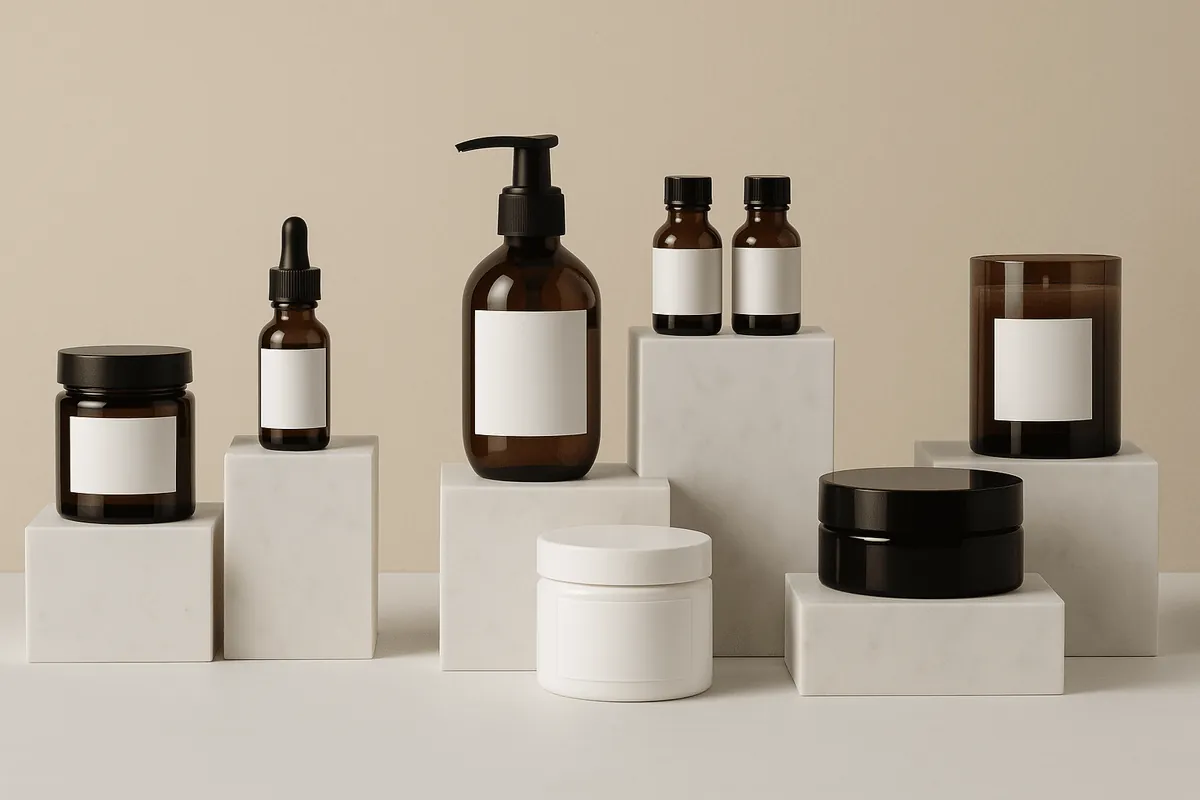
White-label cosmetics work on a fundamental principle: a laboratory develops formulas (creams, serums, oils, skincare). These products, rigorously tested and compliant, are offered to companies that add their own design and logo to the packaging before marketing them. The end consumer only sees your brand, never the manufacturer.
This approach considerably accelerates the creation of a cosmetic range: the contract manufacturer provides its formulation and manufacturing know-how, letting you focus on marketing and sales.
The advantages for cosmetic companies
1. Flexibility and personalisation
Contrary to popular belief, white label does not mean total uniformity. Manufacturers can offer various options to personalise the packaging, the fragrance or certain ingredients, letting you create a brand with its own identity.
2. Reduced production costs
The major economic advantage lies in pooling costs. By collaborating with a laboratory, you benefit from its existing infrastructure and technical services, reducing the entry cost and minimising financial risks.
3. Access to expertise and innovation
Collaborating with a white-label laboratory gives you access to valuable expertise. Contract manufacturers continuously invest in innovation to offer high-performing, compliant formulas, mastering formulation, efficacy testing and complex regulatory requirements.
White label vs private label: understanding the differences
White label relies on standardised formulas, already developed and tested, that you market under your own brand. Conversely, private label involves developing an exclusive, tailor-made formula according to precise specifications.
This difference has important implications for time to market, initial investment, differentiation and control over the final product. White label is ideal to launch quickly with a controlled investment; private label suits projects needing greater differentiation and a larger budget. A hybrid approach is also possible: start with white label to test the market, then move toward personalised formulas.
Steps to launch your white-label cosmetic products
Choosing the supplier
Selecting the laboratory is the most decisive step. Compare several manufacturers: catalogue, services, production capacities, certifications, minimum order quantities and prices. An ideal partner offers transparency and personalised advice; favouring a manufacturer in France can reassure customers. Do not hesitate to order samples.
Product development
- Product selection: choose the natural products for your range according to your positioning.
- Personalisation: explore the available options (fragrance, packaging, adapted formula).
- Creating your brand: develop your distinctive visual identity (name, logo, graphic charter).
- Packaging design: packaging plays a crucial role in consumer perception.
- Regulatory validation: ensure all legal information appears on the label.
Sales strategies
- Distribution channels: e-commerce, specialised shops, direct sales.
- Marketing: social media, influence marketing, advertising.
- Pricing: a policy consistent with your positioning and costs.
- Launch: carefully orchestrate the launch to maximise its impact.
“Launching your white-label cosmetic is an adventure and a real commercial opportunity.”
FAQ
What minimum investment is needed to launch my white-label cosmetic?
It varies considerably depending on the manufacturer, product complexity and minimum order quantities. Some laboratories offer accessible starts with a few hundred units per reference (for example 600 units).
How long does it take to launch a complete range?
Count generally between 3 and 6 months from first contact to delivery, depending on the complexity of your project and your responsiveness.
How much can I personalise the products?
Personalisation mainly concerns the visual identity (brand, logo, packaging) and sometimes the fragrance or specific actives. For an entirely unique formula, tailor-made development is more appropriate.
Is it possible to offer natural products in white label?
Absolutely. Costomise specialises in natural and organic products and holds the necessary certifications.
Will these products really be perceived as my own brand?
Yes. For the consumer, it is exclusively your brand; the manufacturer remains completely invisible.