





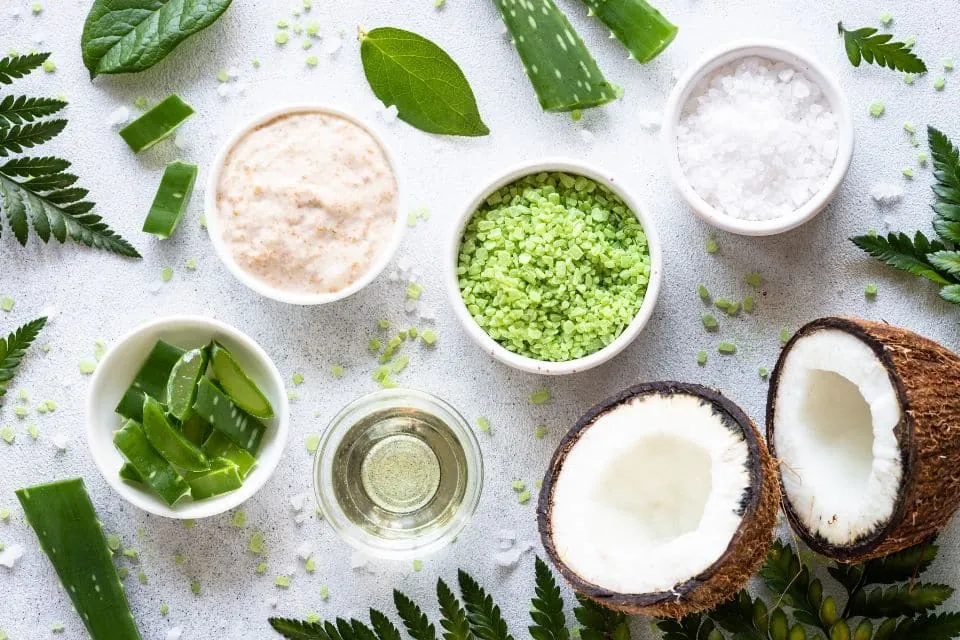

Cosmetics of natural origin are formulated mainly from ingredients derived from nature. These products favour raw materials, transformed by physical processes or green chemistry, that respect both the environment and human health.
Which natural ingredients are used?
Cosmetics of natural origin incorporate a variety of ingredients from plant, mineral and animal sources.
Vegetable oils, such as jojoba, sweet almond or argan, are commonly used for their moisturising and nourishing properties.
Plant extracts, such as aloe vera or chamomile, provide soothing and repairing benefits.
Clays, drawn from the earth, are valued for their purifying and absorbent capacities.
Some products may also contain ingredients of animal origin, such as beeswax, known for its protective and emollient virtues. These components are selected for their beneficial properties and their compatibility with the skin.
How are ingredients transformed into cosmetic products?
Transforming natural ingredients into cosmetic products involves processes that respect the raw material and the environment.
Physical methods, such as grinding, drying or distillation, extract the active principles without altering their properties. Natural fermentation reactions can also be used to obtain molecules found in their natural state.
These processes aim to preserve the integrity of the ingredients while guaranteeing their effectiveness in cosmetic formulations, an essential commitment for any natural cosmetics laboratory like Costomise.
The difference between natural and naturally derived ingredients
Natural ingredients are obtained directly from nature and used as is or after simple physical transformations.
Naturally derived ingredients also come from natural sources, but have undergone controlled chemical transformations to modify their structure or improve their properties.
For example, xanthan gum is considered a naturally derived ingredient because it results from a fermentation reaction of a bacterium, Xanthomonas campestris, on a hydrocarbon substrate. The resulting mixture is then purified with ethanol, dried and ground.
This distinction matters to understand the composition of natural and naturally derived cosmetics, as well as their potential impact on the skin.
The advantages of cosmetics of natural origin
Cosmetics of natural origin offer several advantages for the skin and the environment.
They reduce the risk of irritation or allergies thanks to the absence of potentially harmful synthetic substances. They are often biodegradable, limiting their ecological impact.
The use of natural ingredients also promotes better compatibility with the skin, respecting its balance and natural functions. Finally, these cosmetics are part of an ethical approach, favouring sustainable manufacturing processes and respect for biodiversity.
How to identify a cosmetic of natural origin?
To recognise a cosmetic of natural origin, read the list of ingredients, often presented under the INCI name (International Nomenclature of Cosmetic Ingredients). Natural ingredients are generally indicated by their Latin name.
The presence of labels certifying the naturalness or organic character of the product, such as Cosmos, is also a reliable indicator. Certifications guarantee compliance with strict specifications on composition and manufacturing processes.
Finally, favouring brands that are transparent about the origin and transformation of their ingredients helps you make an informed choice.
Adopting cosmetics of natural origin means caring for your skin while respecting the environment. By paying attention to labels and composition, you can make informed choices for a more natural beauty routine.