




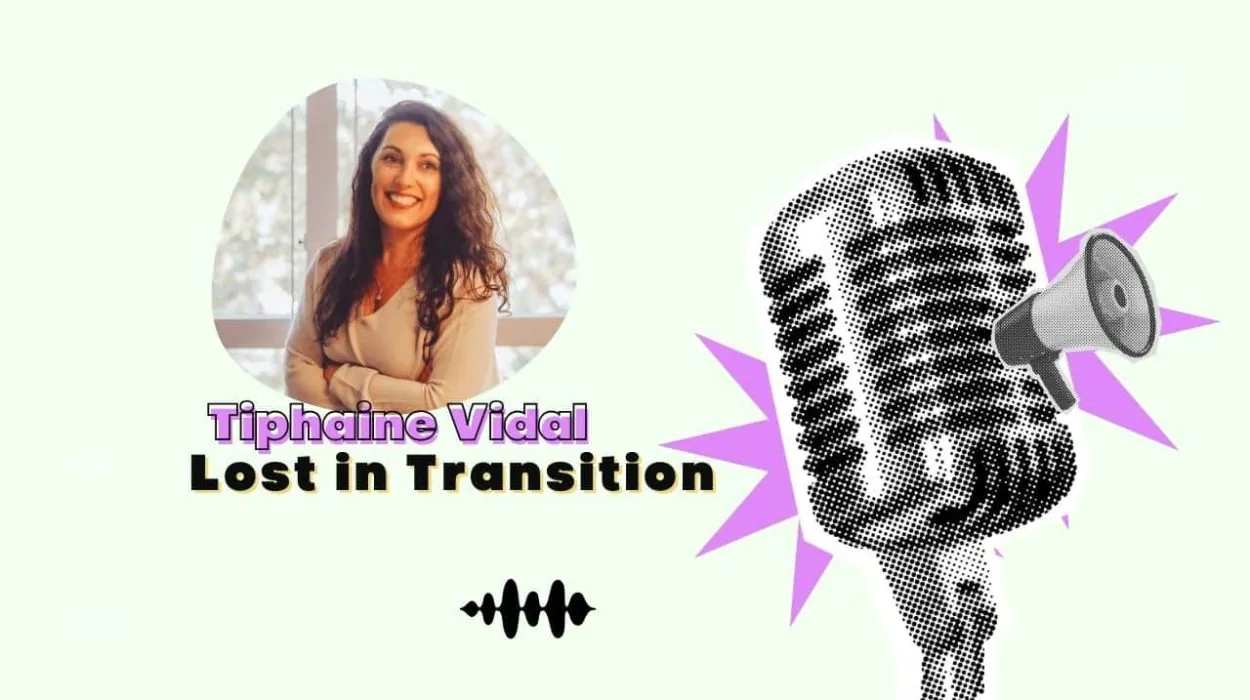

Welcome to this second article devoted to corporate social responsibility (CSR), in which Julien Rochais interviews Tiphaine Vidal, founder of Lost In Transition and La Classe Verte.
CSR is often seen as a priority for large companies. Yet Tiphaine Vidal, a consultant and trainer, reveals that small structures, such as micro-businesses and SMEs, also play a crucial role in this approach.
What are the challenges, and how can we adapt to this global movement? Here is an overview of our conversation with Tiphaine, who shares her expertise on integrating CSR into small businesses and startups.
CSR and small businesses: already a reality
Contrary to popular belief, small businesses are not lagging behind on CSR. Many micro-businesses and SMEs are already active in this area, but often lack the visibility and resources to structure their efforts as formally as large companies.
The key lies in structuring and communicating their actions.
Challenges and opportunities: startups and management practices
Startups are often singled out for questionable management practices. Yet they are not necessarily worse than large companies. Excesses exist in all types of structures, often due to a lack of experience or management codes.
For small businesses, structuring the CSR approach from the start helps avoid these excesses and improve internal cohesion.
CSR: a profitable investment?
One of the main concerns of small businesses is the perceived cost of CSR.
A study by France Stratégie shows that companies engaged in a CSR approach see their economic performance increase by 13% on average.
CSR can be a lever for innovation and for reducing turnover. It attracts and retains talent, particularly among young graduates who value these commitments.
Toward an economic revolution?
With the climate emergency, a profound transformation of economic models can be set in motion. Every company must assess and measure its specific impact to make relevant decisions.
The social and solidarity economy, for example, is an interesting alternative, integrating social and environmental objectives directly into its statutes.
Fighting greenwashing
In the cosmetics sector, greenwashing is a persistent problem. Transparency and regulation are therefore fundamental to guarantee the credibility of CSR commitments.
The European CSRD directive aims to make these approaches comparable and transparent, strengthening consumer trust and that of business partners.
Practical advice for entrepreneurs
For entrepreneurs who wish to integrate CSR, do not hesitate to surround yourself with professionals and do not try to do everything alone.
From the outset, being aware of your sector’s impacts can steer choices toward more sustainable practices. Support and tools exist to help with this transition.
In conclusion, CSR is not only a matter for large companies. Small structures have an essential role to play and can derive many benefits from integrating responsible practices. By structuring their efforts and communicating their actions, they can improve their economic performance and contribute to a more sustainable future.